THE MANY FACES OF AMBALANGODA
Ruwandi Perera explores the story behind Sri Lanka’s iconic mask making tradition
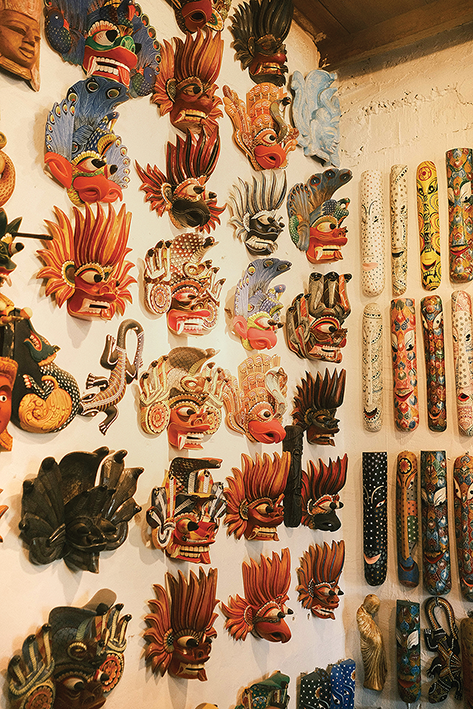
Though donning devil masks may not bode well in many cultures, Sri Lanka has no qualms about it. From being used to ward off evil in homes to decorating everything from bar counters to beachwear for that extra bit of ‘Sri Lankanness,’ masks are part and parcel of the island’s cultural identity.
These masterpieces originate in the sleepy southern town of Ambalangoda, where they are hand-crafted by local artisans who carve, paint and detail them using techniques that have been a part of the locale’s DNA for centuries.
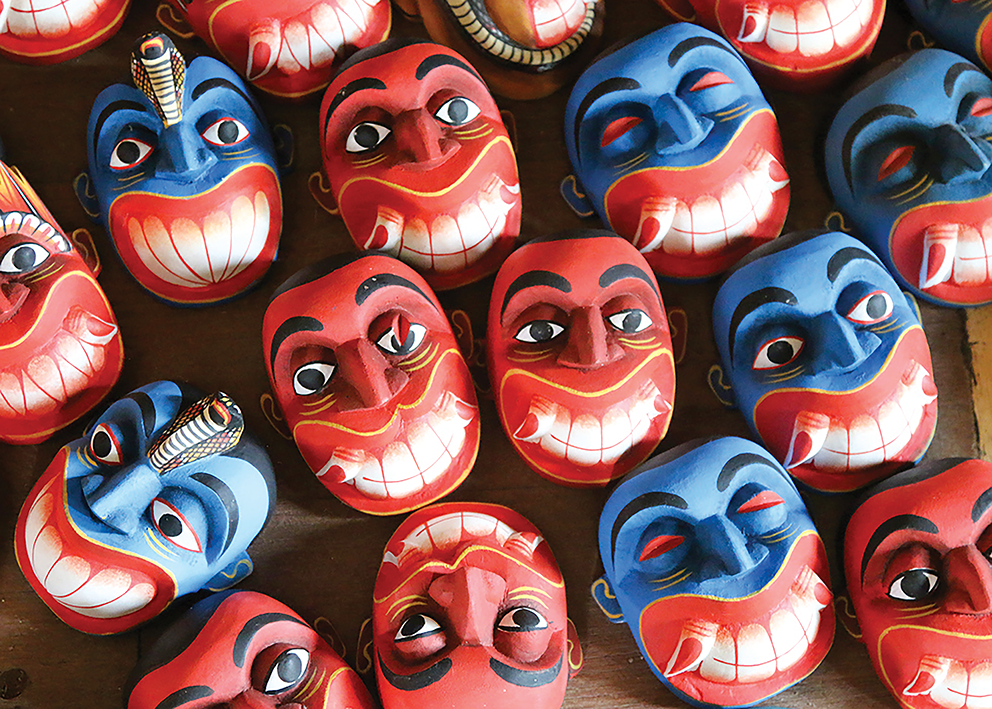
The creative soul of this seaside township gives rise to the ingenuity of its artisans, which is sculpted into Ambalangoda’s masks. Each one tells a story that is a heady mix of myth, legend, history, culture and craftsmanship.
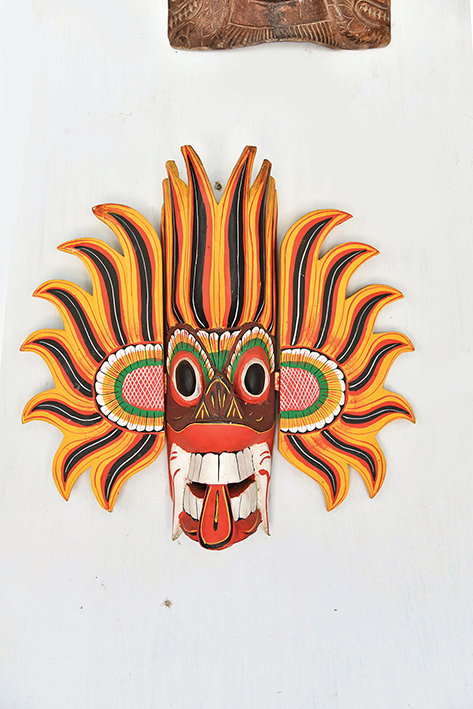
There are many tales of the origins of Ambalangoda’s mask making tradition. The most notable is embedded in Hindu mythology and revolves around a royal pregnancy craving.
During the reign of King Mahāsammata, his consort Queen Menikpala craved humorous entertainment, which was rare and difficult to obtain in those days. It is said that the helpless king turned to the supreme ruler of the heavenly realms, Sakra Devendra, and the deity instructed the architect and engineer of the universe itself – Vishvakarma Divyaputra –
to intervene.
Thus was crafted the first mask of the land and with it the creation of the kolam performance art form.
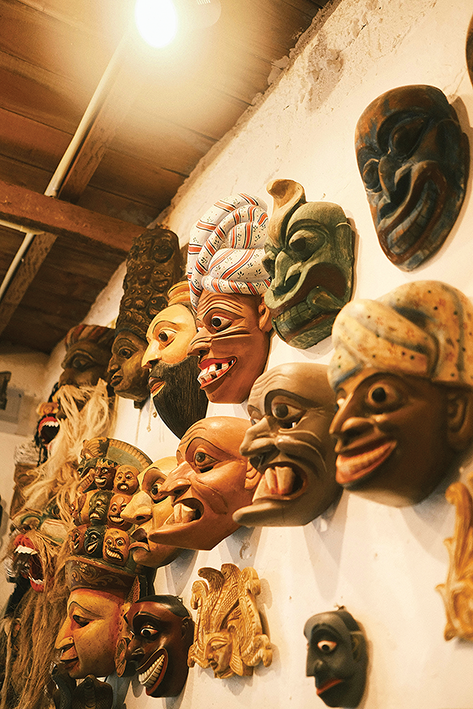
Originally made using soft woods, clay and natural fibres, Ambalangoda’s masks have evolved over the years. Today, they are produced using modern tools and synthetic materials that elevate the vividness of the colours and textural effects.
Yet, regardless of modern innovations that are embedded in these cultural masterworks, they are still very dependent on the craftsman’s personal touch.
The popularity of Sri Lanka’s masks has travelled far and wide, and these prized items can be found
in homes and museums around the world. They have earned a place in establishments such as the British Museum in London, the Museum of Cultural History in Oslo and the Fowler Museum at UCLA in Los Angeles.
While these masks can be seen all over the island, it’s best to watch them being crafted in Ambalangoda.
VES MUHUNU
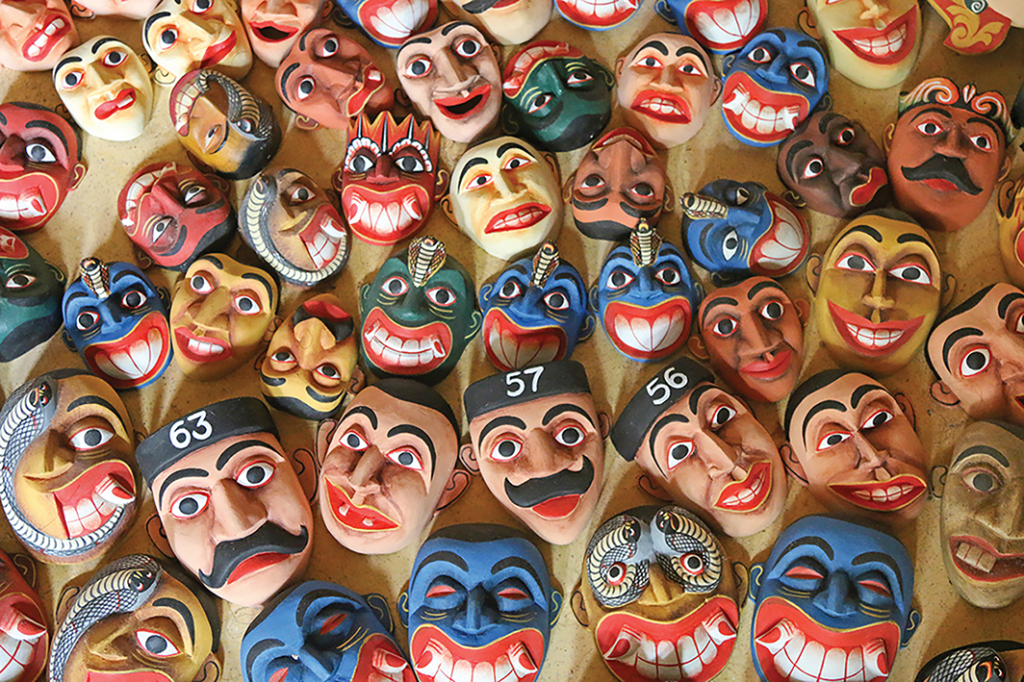
Called ves muhunu (masks of disguise) locally, Sri Lanka’s hand carved, ultra colourful masks have a variety of uses today, ranging from tourist souvenirs and keepsakes to adornments in pageants, ceremonies, dances and puppet shows. Traditionally, however, the island’s ves muhunu occupy three categories: raksha for protection; sanni to ward off evil in exorcism ceremonies; and the more comical kolam for performance based story-telling. Raksha masks are perhaps the most famous. Depicting fierce demons, these masks come in the form of cobras, peacocks, birds and fire. Sanni masks are more ritualistic and are used to cure 18 specific illnesses including mild concerns such as fever to severe issues such as demonic possession. The kolam masks, which are more comical and theatrical, are used in folk theatre to narrate tales of Lord Buddha’s previous lives (jaathaka kathaa), as well as funny stories about island life, love and death, and everything in-between.