
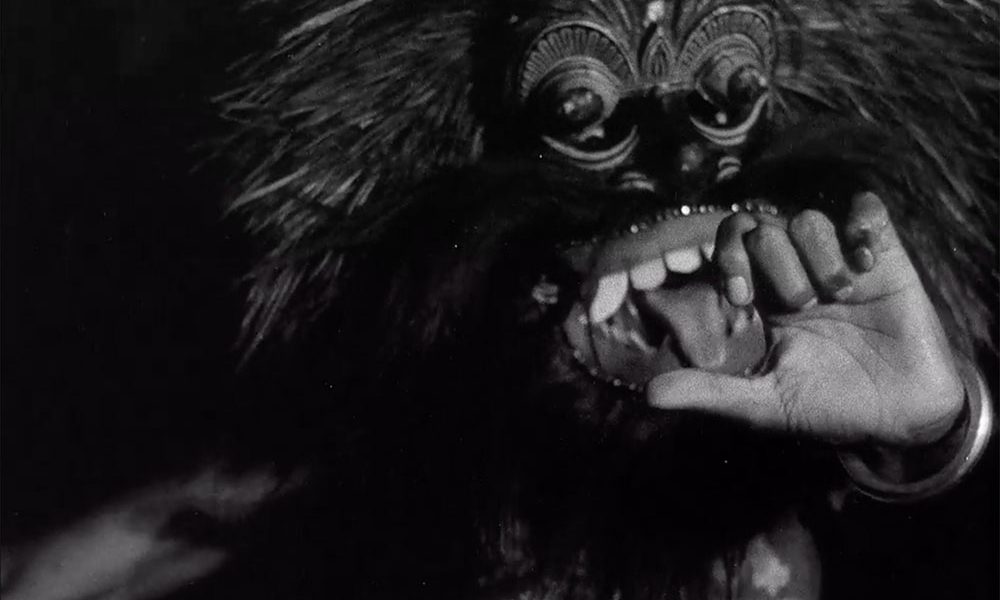
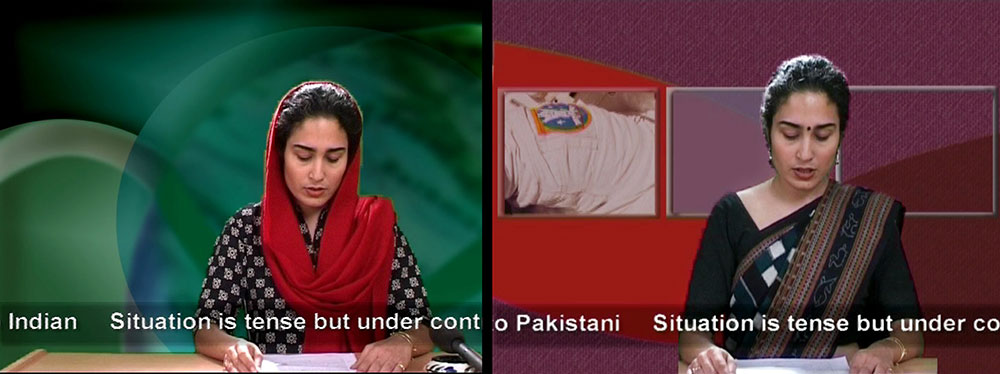
The Museum of Modern and Contemporary Art Sri Lanka (MMCA Sri Lanka) opened a pop-up exhibition titled ‘Three Songs of Ceylon’ on 23 January. The exhibition, curated by Sandev Handy, assisted by Thinal Sajeewa and Nimaya Harris, brings together six moving image artworks, and it will be open until 11 February at The Stables, Park Street Mews, Colombo 2.
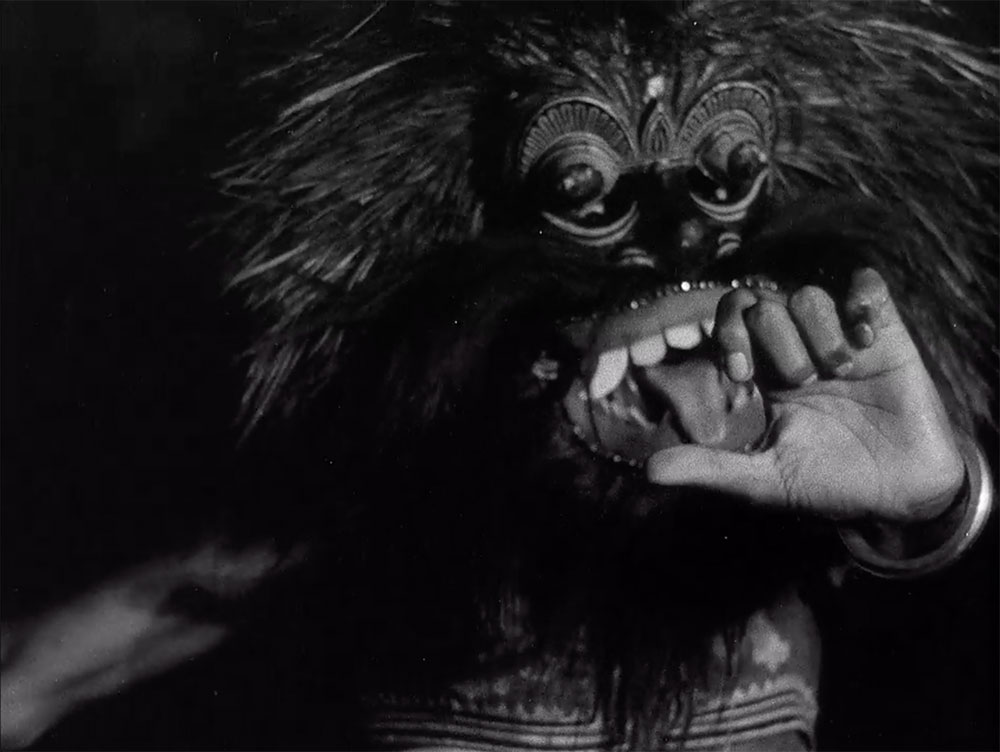
‘Three Songs of Ceylon’ takes as its starting point ‘The Song of Ceylon’ (1934), a film commissioned by the Ceylon Tea Propaganda Board under British colonial rule. ‘Three Songs of Ceylon’ traces how, in the decades that followed, two artists re-visited this film from two distinct vantage points, each producing an alternate ‘song’ as a response. By bringing together each of these three songs of Ceylon in conversation with recent moving image works by contemporary artists, this exhibition explores how stories are told, retold, and unsettled through the medium of moving images.
“Featuring six works made over the last 100 years, ‘Three Songs of Ceylon’ will be the MMCA Sri Lanka’s first exhibition devoted entirely to artists’ films,” noted Handy. “There has yet to be a sustained discussion in Sri Lanka about the history of the medium, how contemporary artists work with it, or how such work is collected and preserved,” he added.
‘Three Songs of Ceylon’ features artists based across Sri Lanka, Germany, Pakistan, the United States of America, Australia, and the United Kingdom. They include Bani Abidi (b.1971), Imaad Majeed (b.1991) with Sharika Navamani (1990), Laleen Jayamanne (b.1947), Lionel Wendt (1900-1944) with John Grierson (1897-1972), Walter Leigh (1905-1942) and Basil Wright (1907-1987), Mark Lapore (1952-2005), and Rosalind Nashashibi (b.1973).
Speaking further about the significance of the works presented in the show, Handy said that, “While videos can serve as crucial records for the study of the past, this exhibition also aims to see them as historical actors in their own right. To understand Sri Lanka’s twentieth and twenty-first centuries, one must understand the media through which the country was continually reassembled.” He also shared that, “I hope that this exhibition helps kick-start a larger conversation about the place of artists’ films in the country, and invites us to see this medium as an active force in history with much still to offer.”
‘Three Songs of Ceylon’ is presented as part of the Art Exchange: Moving Image programme, which is supported by the British Council and organised by LUX and Art South Asia Project. The exhibition is generously supported by Park Street Mews, Goethe Institut Sri Lanka, Fulbright Sri Lanka and American Institute for Sri Lankan Studies. The MMCA Sri Lanka is supported by the John Keells Foundation and the MMCA Sri Lanka Founding Patrons.
Visitors to the exhibition can also join free Curator’s Tours and Exhibition Tours, alongside several other free public programmes offered by the MMCA Sri Lanka. Gallery Talks have been scheduled with artists Bani Abidi on 1 February, Imaad Majeed and Sharika Navamani on 7 February, and the production company Kehelmala on 8 February.
More information about ‘Three Songs of Ceylon’ and public programmes can be found via the MMCA Sri Lanka website www.mmca-srilanka.org, or on Facebook at The Museum of Modern and Contemporary Art Sri Lanka and Instagram at @mmcasrilanka.